



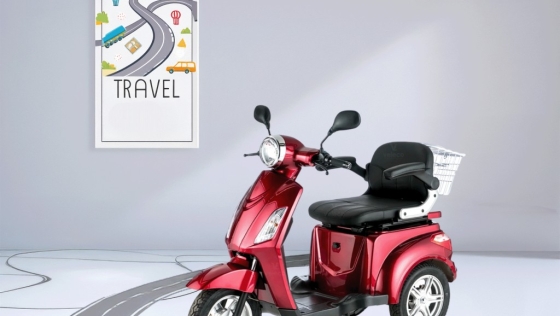
You're cruising along on your mobility scooter when suddenly - whoosh! - a cyclist zips past, nearly taking your wing mirror with them. Or perhaps you're the cyclist, huffing and puffing behind a mobility scooter that's taking its sweet time. Sound familiar? Well, we're here to sort this muddle out once and for all!
Table of contents:
- Legal framework – what the law actually says
- Mobility scooter regulations – your rights decoded
- Pavement cycling – walking the legal tightrope
- Right of way hierarchy – who goes first?
- Safety best practices – keeping everyone happy
- The bottom line
Legal framework – what the law actually says
The legal stuff can be a right maze! But here's the thing - the Highway Code is crystal clear about cycling on pavements. Simply put: it's a no-go unless you're on a designated shared path. But here's where it gets interesting… Mobility scooters get special treatment under the Road Traffic Act 1988. They're classified as “invalid carriages”, which gives them legal rights that cyclists simply don't have.
The shared path conundrum
Those blue circular signs with the pedestrian and cycling symbols? They're your golden ticket to legal cycling on what looks like a pavement. But don't get too excited – local councils have different approaches to these shared spaces. Some areas are more generous than others, and what's perfectly fine in Birmingham might land you in hot water in Bath!
Mobility scooter regulations – your rights decoded
Class 2 vs Class 3 – the crucial difference
Class 2 scooters are the pavement champions! Limited to 4mph, these compact beauties have unrestricted access to pavements. No insurance, no registration, no fuss. Absolute game-changer for getting about! Class 3 scooters are the road warriors. They can hit 8mph on roads but - and this is crucial - must slow to 4mph on pavements. Many users forget to flick that speed switch when hopping between road and pavement.
Your legal protection is rock solid
The Equality Act 2010 has got your back in a big way. Public spaces must make reasonable adjustments for mobility scooters, and they can't just refuse you entry. It's like having a legal bodyguard!
Pavement cycling – walking the legal tightrope
Here's where things get a bit sticky for cyclists. Cycling on pavements is completely prohibited unless you're on those special shared paths we mentioned. But wait! There's a twist...
The reality check
Police often turn a blind eye to careful pavement cycling, especially where cycling infrastructure is more holes than road (and let's face it, that's most places!). Children under 10 are actually encouraged to cycle on pavements for safety. Makes sense, really. The standard penalty? A £30 fixed penalty notice.
Right of way hierarchy – who goes first?
This is the big one! The hierarchy is actually dead simple when you know it:
- Pedestrians rule the roost - absolute priority, no ifs, buts, or maybes. Even on shared paths, they're the kings and queens of the pavement kingdom.
- Mobility scooters come next - they've got legal precedence over cyclists. Think of it as the mobility equivalent of diplomatic immunity!
- Cyclists bring up the rear - only where they're legally allowed, mind you.
Safety best practices – keeping everyone happy
Speed management (or: how not to be a speed demon)
Mobility scooter users, when it's busy, ease off that throttle! Two to three mph in crowded areas keeps everyone comfortable. Your scooter might be capable of more, but showing consideration is worth every penny of goodwill. Cyclists on shared paths - and we cannot stress this enough - walk pace only when pedestrians are about. Yes, it feels painfully slow, but it's the price of sharing space harmoniously.
Communication is everything
High-vis gear is brilliant, especially during those dreary winter months when visibility is about as good as pea soup! A cheerful "excuse me" or gentle bell ring works wonders too. But here's the thing - don't assume everyone can hear you. Some folks wear headphones, others have hearing difficulties. Visual cues matter just as much!
Weather warnings
British weather, eh? One minute it's glorious sunshine, the next you're caught in a downpour that would make Noah nervous! Wet conditions turn pavements into skating rinks. Reduce speed, increase following distances, and watch out for pedestrians wrestling with umbrellas. Common sense really, but amazing how many people forget when they're in a rush.
The bottom line
Look, it's really quite simple when you strip away all the legal jargon. Pedestrians always come first, mobility scooters have precedence over cyclists, and everyone needs to share spaces with a bit of British politeness and common sense. The secret sauce? Patience, awareness, and treating others as you'd like to be treated. Whether you're scooting or cycling, remember that we're all just trying to get from A to B safely and without too much fuss. A little consideration goes a long way in keeping our pavements happy places for everyone!