



Whether you're trundling home from an evening natter at the local or simply enjoy the peaceful ambiance of twilight scoots, proper lighting and safety kit aren't just nice-to-haves — they're absolute must-haves for not ending up in a right pickle! This guide (think of it as your night-time mobility bible) will illuminate everything you need to know about essential lighting systems and those brilliant safety gadgets that make after-dark journeys both safer and more enjoyable. So let's shed some light on the matter, shall we?
Table of contents
- The importance of visibility for night-time mobility scooter use
- Essential front lighting solutions for mobility scooters
- Rear and side lighting systems for 360° visibility
- Mobility scooter safety accessories for night travel
- Seasonal considerations for after-dark mobility scooter journeys
The importance of visibility for night-time mobility scooter use
When it comes to night-time mobility scooter jaunts, visibility isn't just important — it's absolutely critical for keeping you in one piece! Recent studies from the Royal Society for the Prevention of Accidents (boring name, vital work!) reveal that we mobility scooter users face a significantly higher risk of coming a cropper after dark, with poor visibility being the number one culprit. "I never thought twice about riding at night until I nearly ploughed straight into a cyclist who simply didn't spot me. What a wake-up call that was!" shares Margaret, a sprightly 68-year-old mobility scooter user from Manchester.
Legal requirements you shouldn't ignore
Are you aware that UK law requires mobility scooters to display front and rear lights when used on roads after dark? No? Well, you're not alone! Many of us aren't familiar with these regulations until we're pulled over by a friendly neighbourhood bobby. But visibility isn't just about keeping the DVLA happy. Poor lighting doesn't just make you invisible to others; it also stops you spotting those pesky hazards like wonky pavements, unexpected obstacles, or vehicles appearing out of nowhere like something from Doctor Who.
The dual purpose of proper lighting (it's a two-for-one deal!)
Have you considered the two distinct jobs your lighting system needs to do? First, you need to see where you're trundling — spotting potential disasters in your path before it's too late. Second, and equally important, you need others to see you coming. It's like being both the lighthouse and the ship, if you will! A common blooper many newcomers make is focusing solely on forward lighting while completely forgetting about side and rear visibility. This creates dangerous blind spots where you remain about as visible as a ninja at midnight. Not ideal when that delivery van is reversing out of a driveway!
Visibility challenges specific to mobility scooters (we're not cars, you know!)
Our trusty steeds sit lower to the ground than most vehicles on the road, making them harder to spot than a needle in a haystack, especially in dodgy lighting. This height disadvantage means we need to work even harder to stand out in the crowd. What many new scooter users don't twig is that standard car lighting rules don't always translate perfectly to our mobility marvels. The unique profile and movement patterns of these zippy little vehicles require special lighting approaches that address their specific visibility challenges. We're special, after all!
Essential front lighting solutions for mobility scooters
Selecting the right front lighting system for your mobility scooter can feel about as straightforward as assembling flat-pack furniture after a few sherries. Too many options! Let's break down what you need to know to make a smashing choice that'll keep you safe and sound on your after-dark adventures. LED systems have become the absolute dog's dinner for mobility scooter lighting, offering brightness that'll make your neighbours jealous, power consumption that won't kill your battery, and durability that'll outlast your favourite pair of slippers.
Where exactly should your headlight be perched?
The ideal positioning is a bit like Goldilocks' porridge — not too high, not too low, but just right! You need to balance two competing needs: illuminating the path far enough ahead while not blinding pedestrians. Most experts recommend mounting front lights at a height of approximately 70-90 cm from the ground, angled slightly downward to illuminate 3-4 metres ahead of your trusty steed.
Brightness levels: how many lumens do you need?
When shopping for mobility scooter lights, you'll encounter the term “lumens” — a fancy-pants measurement of light output. But what level hits the sweet spot? For urban jaunts with some street lighting, 300-500 lumens typically does the trick nicely. For poorly lit country lanes where the darkness is thicker than pea soup, aim for 500-800 lumens.
Rear and side lighting systems for 360° visibility
While front lighting helps you see where you're going, rear and side lighting systems ensure others see you coming — particularly crucial when vehicles approach from different directions. Let's explore how to achieve comprehensive visibility that protects you from all angles.
Required rear lighting specifications
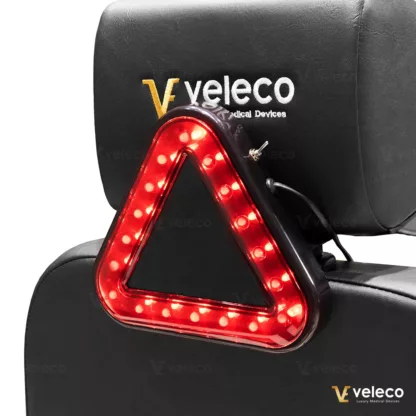
UK regulations stipulate that mobility scooters used on roads after dark must display a red rear light visible from a reasonable distance. But what exactly constitutes “reasonable”? Safety experts recommend rear lights with a minimum output of 50-100 lumens, positioned between 25-150 cm from ground level. What's often overlooked is the benefit of having multiple rear lights at different heights. This arrangement increases your visibility profile and provides redundancy should one light fail unexpectedly.
Strategic placement of reflector strips
Reflective strips serve as an excellent passive safety feature, requiring no power yet dramatically increasing visibility when illuminated by external light sources. But their effectiveness depends entirely on proper placement. The most effective configuration includes reflective elements on:
- Vertical surfaces at the rear of the scooter
- Horizontal surfaces near wheel arches
- Outward-facing sides of armrests
- Any protruding elements like basket supports
Mobility scooter safety accessories for night travel
Beyond basic lighting, specialised accessories can significantly enhance your safety during night-time journeys. These additional items provide extra layers of protection and visibility, especially in challenging conditions.
Reflective wearables: becoming a beacon of visibility
While your scooter's lighting system forms the foundation of your visibility strategy, what you wear matters tremendously as well. Reflective vests, jackets, and accessories transform you — the rider — into an additional visibility point. High-visibility vests with reflective strips are particularly effective, as they sit higher than most scooter-mounted lights and create a distinctive human silhouette that drivers instinctively recognise. Some users prefer reflective sashes or bands that can be quickly slipped over regular clothing. Look for reflective gear that combines fluorescent daytime colours with retroreflective materials that shine brightly when illuminated by headlights at night. The most effective options incorporate reflective elements at varying heights to create maximum visibility.
Flag options with illuminated features
Safety flags have long been used to increase the visibility profile of mobility scooters, but modern versions take this concept to new levels with built-in illumination. These flags typically extend 1-1.5 metres above the scooter, dramatically increasing your visual footprint.
Weather shields with integrated visibility elements
Riding in inclement weather presents additional visibility challenges. Modern weather shields and canopies now incorporate reflective bordering and even LED light strips to maintain visibility while keeping you dry. These shields increase your scooter's physical profile, making you more noticeable while protecting you from the elements. The vertical surfaces also provide excellent mounting locations for additional reflective elements.
Battery considerations for extended lighting use
One aspect of night-time mobility often overlooked is how lighting systems affect your scooter's battery life and range. Understanding and managing this relationship is crucial for safe and confident after-dark journeys.
How lighting impacts your scooter's range
Have you ever wondered exactly how much your lighting system affects your battery? The impact varies dramatically depending on the technology used. Traditional incandescent lights can reduce range by 15-20%, while efficient LED systems typically impact range by just 5-8%. The relationship between lighting and battery consumption isn't linear — temperature plays a significant role too. Batteries deliver less power in cold conditions, precisely when you're likely to need lights for longer periods due to shorter daylight hours.
Seasonal considerations for after-dark mobility scooter journeys
Night-time mobility requirements vary significantly throughout the year, with each season presenting unique challenges and considerations. Adapting your lighting strategy seasonally ensures you're always properly equipped regardless of the time of year.
Winter lighting strategies for shortened days
Winter presents the greatest challenge for mobility scooter users, with darkness descending by mid-afternoon in many parts of the UK. This means even routine journeys often occur partially or entirely in darkness. During winter months, prioritise maximum visibility with these approaches:
- Increase the number of reflective elements on both the scooter and your clothing
- Consider upgrading to higher-lumen headlights for the season
- Add secondary rear lights to enhance your visibility profile
- Ensure lights are positioned high enough to remain visible even when roadside snow piles are present
Don't forget that battery performance diminishes in cold temperatures — you may experience 10-20% less range in sub-zero conditions. This reduced capacity coincides precisely with increased lighting needs, creating a double challenge that requires careful planning.
Riding through fog and rain
Foggy and rainy conditions create unique visibility challenges, as standard lighting can actually reduce visibility when light reflects off water particles in the air. Specialised fog lights mounted lower on your scooter can dramatically improve your ability to see and be seen in these conditions. Look for lights with:
- Yellow or amber tint (which penetrates fog more effectively than white light)
- Wide beam pattern rather than focused beam
- Lower mounting position to reduce reflection and glare
Rain creates additional challenges beyond reduced visibility. Ensure all electrical connections are properly weatherproofed, as water infiltration can cause sudden lighting failure precisely when you need it most.
Summer evening considerations
While summer offers extended daylight, evening journeys still benefit from appropriate lighting. The challenge during summer months is the transition period — when ambient light is diminishing but hasn't reached full darkness. During these “twilight” conditions, high-contrast lighting actually provides better visibility than maximum brightness. Many users find that flashing or pulsing mode works particularly well during this transitional period, as the changing light pattern catches attention more effectively than steady illumination.