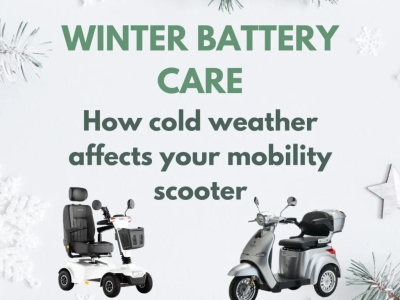
The winter months bring unique challenges for mobility scooter users, with battery performance becoming a critical concern that requires special attention. As temperatures continue to fall, understanding how to protect and maintain your mobility scooter's battery becomes essential for ensuring reliable performance throughout the cold season. Here is what you need to know!
Table of contents
- Understanding cold weather's impact on mobility scooter batteries
- Essential winter storage guidelines
- Extending battery life in cold conditions
Understanding cold weather's impact on mobility scooter batteries
When winter arrives, mobility scooter batteries face several significant challenges that can affect their performance and reliability. The fundamental issue lies in the battery's chemical composition and how it reacts to cold temperatures. As the mercury drops below 10°C, the chemical reactions that power mobility scooter batteries begin to slow down considerably. This reduction in chemical activity leads to decreased battery capacity and efficiency, even when the battery indicator shows a full charge.
How temperature affects battery chemistry
The science behind cold weather battery performance is fascinating yet straightforward. Inside every mobility scooter battery, chemical reactions generate the electrical power needed for operation. These reactions rely heavily on temperature to maintain optimal efficiency. During winter months, the cold environment causes these reactions to occur more slowly, resulting in reduced power output and decreased range.
Furthermore, cold temperatures affect the battery's ability to accept and hold a charge. When charging a cold battery, the charging process becomes less efficient, potentially leading to incomplete charging cycles. This situation creates a compound effect where not only is the battery producing less power, but it may not be receiving a full charge in the first place.
Impact on daily usage
A scooter that typically achieves a range of 20 miles might only manage 12-15 miles in cold conditions. This reduction necessitates more frequent charging and careful journey planning to avoid being stranded with a depleted battery.
The impact becomes particularly noticeable during hill climbs or when carrying additional weight.
The battery may struggle to provide the necessary power for these demanding situations, leading to slower speeds and reduced performance. Users often notice their scooters feeling less responsive and requiring more energy to complete familiar routes.
Essential winter storage guidelines
Proper storage plays a crucial role in maintaining battery performance during winter months. The environment where you keep your mobility scooter can significantly impact its battery life and overall functionality.
Temperature-controlled storage solutions
Finding the right storage location for your mobility scooter is essential for protecting its battery from extreme cold.
The ideal storage temperature range lies between 10°C and 21°C. This optimal range helps maintain the battery's chemical stability while preventing the degradation that can occur in colder conditions.
Heated garages or utility rooms provide excellent storage options, as they offer protection from the elements while maintaining a relatively stable temperature.
Charging practices for cold weather
Winter conditions require adjustments to standard charging routines. One of the most critical rules is never to charge a battery that's thoroughly chilled. Instead,
allow your scooter to warm up to room temperature for at least an hour before connecting the charger. This waiting period helps prevent damage to the battery cells and ensures more efficient charging.
Regular charging becomes even more crucial during winter months. Maintaining a good charge level helps the battery perform better in cold conditions. However, it's equally important
not to overcharge, as this can lead to decreased battery life over time. Using a smart
charger designed specifically for mobility scooter batteries can help prevent overcharging while ensuring optimal charge levels.
Extending battery life in cold conditions
Optimising usage patterns
Adapting your usage patterns during winter can significantly extend battery life and improve reliability. Planning journeys to avoid steep inclines where possible reduces the strain on your battery during already challenging conditions. Similarly,
maintaining a steady speed rather than frequently stopping and starting helps conserve battery power.
Winter journey planning becomes particularly important. Breaking longer trips into shorter segments with warming periods in between allows the battery to recover and perform more efficiently. This approach might mean planning stops at heated indoor locations during longer journeys, providing opportunities for both the battery and user to warm up. For instance, on a 6-mile journey to a shopping centre, you might
plan a 15-minute stop at a café or supermarket at the halfway point. By breaking up longer journeys like this, you give your mobility scooter's battery a chance to recover in a warm environment, which helps maintain better performance for the return journey.
Pre-journey warming routines
One of the most effective yet often overlooked strategies for maintaining battery performance involves proper pre-journey preparation.
Starting your journey with a warm battery can significantly improve its performance and range. Consider implementing a simple warm-up routine about 30-45 minutes before heading out.
If your
mobility scooter is stored in a colder area, move it to a warmer space before your planned journey. Even bringing it into a heated hallway or room for a short period can make a noticeable difference in battery performance. During this warming period, avoid turning on the scooter or using any power - this time is purely for allowing the battery temperature to stabilize naturally.
This warm-up period serves two purposes:
- it helps the battery's chemical reactions occur more efficiently, and
- it allows any condensation that might have formed to evaporate, reducing the risk of electrical issues.
Think of it like warming up your car on a cold morning - a little preparation time can lead to much better performance throughout your journey.
Winter battery care: Conclusion
Successful winter battery care for mobility scooters requires a combination of proper maintenance, smart usage patterns, and thorough preparation. By following these sample rules and maintaining vigilant care of your battery system, you can significantly reduce the impact of cold weather on your mobility scooter's performance.
Stay proactive with your battery care routine, and don't hesitate to seek professional assistance when needed. With proper attention and care, your mobility scooter can remain a reliable companion throughout even the coldest winter months, ensuring you maintain your independence and quality of life regardless of the weather conditions.
To book a winter check-up email us at: [email protected] or give us a phone call: (00 44) 01234 816 404.