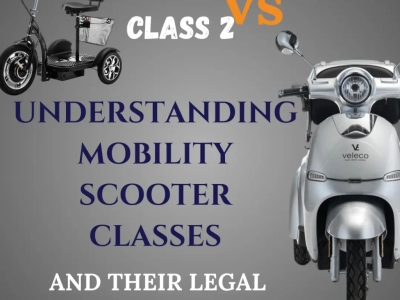
"Sorry mate, but you can't drive that on the road!" This common misconception, often shouted at mobility scooter users, highlights a widespread misunderstanding of
mobility regulations. The truth is, some mobility scooters absolutely can be driven on roads – it all depends on their class. And now
with over 350,000 UK residents relying on these vehicles for daily transport, understanding the differences between
Class 2 and Class 3 scooters has never been more important. Let's break down everything you need to know about these classes of disability scooters.
Table of contents:
- What are mobility scooter classes?
- Class 2 mobility scooters: Features and regulations
- Class 3 mobility scooters: Features and regulations
- Legal requirements and documentation
- Making the right choice: Class 2 vs Class 3
- Safety and training recommendations
What are mobility scooter classes?
Understanding mobility scooter classifications in the UK is straightforward once you grasp the basic concepts. The government has established two main categories -
Class 2 and Class 3 invalid carriages - each designed to serve different needs and capabilities. These classifications aren't just bureaucratic red tape; they're
carefully thought-out categories that help ensure everyone can find the right mobility solution for their lifestyle.
The classification of your
mobility scooter affects everything from where you can drive to what safety features you need. Class 2 scooters are perfect for those who stick to pavements and shopping centres, while Class 3 vehicles offer more flexibility for those who need to venture onto roads.
Class 2 mobility scooters: Features and regulations
Class 2 mobility scooters are the go-to choice for many people who primarily travel
short distances in pedestrian areas. These compact vehicles prove invaluable for shopping trips, visiting friends, or riding indoor spaces. Many users appreciate their simplicity and ease of use, particularly when it comes to storage and transport.
When it comes to speed, Class 2 scooters maintain a steady maximum pace of
4mph, matching a brisk walking speed. This limit ensures safe operation around pedestrians while still providing efficient transport. These vehicles are designed specifically for pavement use, though you can cross roads when necessary or use them on the road if no pavement is available.
One of the biggest advantages of Class 2 scooters is their straightforward nature -
there's no need for registration or tax discs, and their lighter weight makes them easier to handle for many users. They're particularly popular among those who need mobility assistance primarily for shopping centres and local journeys.
Class 3 mobility scooters: Features and regulations
Class 3 scooters offer a more versatile solution for those who need greater range and capability. These vehicles
can travel up to 8mph on roads (though they must stick to 4mph on pavements), making them suitable for longer journeys and mixed-terrain travel. Their robust construction and additional features provide users with more independence and travel options.
Speaking of features,
Class 3 mobility scooters come equipped with everything needed for safe road use. This includes:
- front and rear lights,
- indicators,
- a horn, and
- rearview mirrors.
Essentially similar to what you'd find on a small motor vehicle. These safety features aren't just legal requirements; they're essential tools that help users ride various traffic situations confidently.
Legal requirements and documentation
The legal aspects of mobility scooter ownership vary significantly between classes. Class 3 scooters require
registration with the DVLA. While there's no driving licence requirement, users must be 14 or older to operate a Class 3 scooter. This age restriction doesn't apply to Class 2 vehicles, making them accessible to users of all ages.
Insurance presents an interesting consideration. While not legally mandatory for either class, it's highly recommended. Many users find peace of mind in knowing they're covered for potential accidents or theft.
Specialist mobility scooter insurance policies often provide comprehensive coverage at reasonable rates.
Making the right choice: Class 2 vs Class 3
Choosing between the two classes depends largely on your lifestyle and travel needs. Think about your typical journeys: Do you mainly pop to the local shops and ride indoor spaces?
A Class 2 scooter might be perfect. Need to travel longer distances or regularly use roads? A Class 3 vehicle could offer the freedom you're looking for.
Consider your storage options too. Class 2 scooters generally take up less space and are easier to transport in a car if needed. Class 3 models, while larger, offer more stability and range. Your home's access points and storage facilities play a crucial role in this decision.
Safety and training recommendations
While no formal training is required to operate a mobility scooter, many users find that a bit of practice and guidance helps build confidence. Local mobility centres often offer training sessions or
a test drive (home demonstration) where you can learn essential skills and safety tips. Before buying your medical vehicle, you can try it yourself first.
Regular maintenance keeps your scooter running safely and reliably. Simple checks of batteries, tyres, and lights can prevent most common issues.
Need assistance? We are here for you!
Still weighing up your options between Class 2 and Class 3 scooters? The Velobike team is ready to help you make the right choice. Give us a ring on (00 44) 0 1234 816 404 or drop us an email at
[email protected] for personalised advice tailored to your needs.
Quick tip: We're currently offering
post-season checkups for existing mobility scooter owners - the perfect opportunity to assess if your current model still meets your needs or if it's time for an upgrade.
Book your inspection slot now, as appointment times are filling up quickly for this popular service. To do so, simply call us at (00 44) 0 1234 816 404.
Whether you're a first-time buyer or considering an upgrade, our mobility specialists are here to guide you through every step of the process. Because your independence matters to us as much as it matters to you.